
Introduction: A New Era in Animal Behaviour Research
Animal behaviour research lies at the heart of wildlife conservation. Understanding how animals move, interact, migrate, forage, breed, and respond to environmental pressures allows scientists and conservationists to design better protection strategies. Traditionally, studying animal behaviour has relied on ground observations, camera traps, tagging, and satellite tracking—methods that, while valuable, often come with limitations related to cost, accessibility, disturbance, and spatial scale.
In recent years, advancing animal behaviour research using drone technology has emerged as a transformative approach. Drones—also known as Unmanned Aerial Vehicles (UAVs)—enable researchers to observe animals from above with unprecedented precision, flexibility, and minimal disturbance when used responsibly. From tracking migratory birds across wetlands to studying predator–prey dynamics in savannas, drones are reshaping how behavioural data is collected and analyzed.
This article provides an in-depth, research-driven exploration of how drone technology is advancing animal behaviour research, the ethical frameworks guiding its use, real-world conservation applications, limitations, and future directions.
Understanding Animal Behaviour Research
What Is Animal Behaviour Research?
Animal behaviour research (ethology) studies how animals interact with their environment, other species, and members of their own species. It includes:
- Movement and migration patterns
- Feeding and foraging behaviour
- Social structures and communication
- Reproductive behaviour
- Anti-predator responses
- Human–wildlife interactions
These insights are essential for:
- Designing protected areas
- Reducing human–wildlife conflict
- Monitoring ecosystem health
- Conserving endangered species
Challenges in Traditional Behavioural Research
Despite its importance, traditional animal behaviour research faces significant challenges:
- Limited Spatial Coverage – Ground surveys cover small areas and may miss large-scale patterns.
- Observer Bias and Disturbance – Human presence can alter animal behaviour.
- High Costs – Manned aircraft, GPS collars, and long-term fieldwork are expensive.
- Inaccessibility – Remote, dangerous, or fragile habitats are difficult to study.
- Low Temporal Resolution – Infrequent observations miss short-term behavioural changes.
These limitations created a need for innovative, ethical technologies—leading to the rise of drones.
What Is Drone Technology in Wildlife Research?
Defining Conservation Drones
Drones used in wildlife research are small to medium UAVs equipped with sensors such as:
- High-resolution RGB cameras
- Thermal imaging cameras
- Multispectral sensors
- LiDAR (in advanced studies)
- GPS and telemetry systems
They can be manually piloted or programmed for autonomous flights using pre-defined paths.
Why Drones Are Different
Unlike traditional tools, drones offer:
- Aerial perspective without aircraft costs
- Repeatable and standardized surveys
- Access to hard-to-reach habitats
- High-resolution behavioural data
- Reduced physical presence of researchers
This makes drones uniquely suited for advancing animal behaviour research using drone technology across diverse ecosystems.
How Drone Technology Advances Animal Behaviour Research
1. Non-Invasive Behaviour Observation
One of the most significant contributions of drones is their ability to observe animals without physical contact.
- No need for capturing or tagging animals
- Reduced stress compared to close human observation
- Ability to monitor natural, undisturbed behaviour
When flown at appropriate altitudes and distances, drones can blend into background noise, especially in open landscapes.
2. Monitoring Movement and Migration Patterns
Drones allow researchers to:
- Track flock formations in birds
- Monitor migration routes across wetlands and flyways
- Observe daily movement patterns in mammals
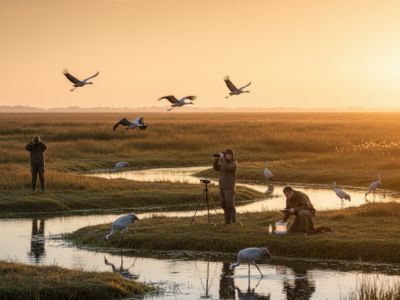
For migratory species such as cranes, geese, or ungulates, drones provide short-term, high-resolution movement data that complements satellite tracking.
3. Studying Social Structures and Group Dynamics
Animal social behaviour—such as herd organization, dominance hierarchies, or cooperative hunting—is often difficult to study from the ground.
Drones enable:
- Top-down visualization of group spacing
- Analysis of leadership and following behaviour
- Monitoring of parental care and group cohesion
This aerial perspective is especially valuable for species like elephants, wolves, dolphins (nearshore), and colonial nesting birds.
4. Behavioural Responses to Environmental Change
Using drones, researchers can study how animals respond to:
- Habitat fragmentation
- Climate-driven changes in vegetation
- Seasonal water availability
- Human disturbances such as roads or agriculture
Repeated drone surveys allow behavioural comparisons across time, revealing trends that static methods miss.
Drone Sensors and Their Role in Behaviour Research
RGB Cameras
Standard visual cameras are used for:
- Species identification
- Behavioural classification
- Counting individuals
- Mapping movement paths
They are cost-effective and widely used in conservation projects.
Thermal Imaging
Thermal drones detect heat signatures, enabling:
- Night-time behaviour observation
- Monitoring nocturnal species
- Detecting animals in dense vegetation
This is particularly valuable for studying elusive or endangered mammals.
Multispectral Sensors
These sensors help correlate behaviour with habitat quality by analyzing vegetation health, water stress, and land use patterns.
AI-Integrated Sensors
When combined with artificial intelligence, drones can:
- Automatically identify species
- Classify behaviours (resting, foraging, fleeing)
- Reduce manual data processing time
Ethical Frameworks for Using Drones in Animal Behaviour Research
Why Ethics Matter
While drones offer immense potential, misuse can:
- Disturb wildlife
- Alter natural behaviour
- Cause stress or injury
- Undermine conservation goals
Therefore, advancing animal behaviour research using drone technology must be guided by strong ethical standards.
Core Ethical Principles
- Minimize Disturbance
- Maintain safe flight altitudes
- Avoid sensitive periods (breeding, nesting)
- Species-Specific Guidelines
- Different species respond differently to drones
- Preliminary behavioural assessments are essential
- Legal Compliance
- Follow national aviation and wildlife laws
- Obtain permits where required
- Data Responsibility
- Protect sensitive location data
- Avoid misuse by poachers or illegal actors
- Transparency and Review
- Ethical review boards should assess drone studies
- Methods should be openly documented
Case Studies: Drones in Animal Behaviour Research
Migratory Birds and Flyway Research
Drones have been used to:
- Monitor flock spacing and formation
- Observe landing and take-off behaviour
- Assess disturbance from hunting or infrastructure
These insights inform flyway conservation strategies and policy decisions.
Marine and Coastal Behaviour Studies
In coastal environments, drones help study:
- Dolphin pod dynamics
- Whale surface behaviour
- Shark movement patterns
Aerial observation reduces the need for intrusive boat approaches.
Large Mammals in Protected Areas
For species like elephants, giraffes, and deer, drones support:
- Anti-poaching monitoring
- Social group analysis
- Habitat use studies
This dual conservation-research role makes drones especially valuable.
Integrating Drones with Other Research Tools
Drones + GPS Tracking
Combining drone imagery with GPS collar data provides:
- Contextual movement explanations
- Visual validation of tracking points
Drones + Camera Traps
Drones identify hotspots where camera traps should be placed, improving efficiency.
Drones + GIS and AI
Geospatial analysis allows behavioural data to be mapped, modeled, and predicted—supporting long-term conservation planning.
Limitations and Challenges of Drone Technology
Despite their benefits, drones are not a universal solution.
Technical Limitations
- Limited battery life
- Weather sensitivity
- Payload restrictions
Behavioural Risks
- Some species are sensitive to drone noise
- Improper use can cause flight or stress responses
Data Management Challenges
- Large data volumes
- Need for skilled analysis
- Risk of misinterpretation without ecological expertise
Addressing these challenges requires training, ethical guidelines, and interdisciplinary collaboration.
The Future of Advancing Animal Behaviour Research Using Drone Technology
AI-Driven Behaviour Classification
Future systems will automatically identify complex behaviours in real time.
Autonomous Long-Range Surveys
Fixed-wing drones will enable long-distance behavioural monitoring.
Community-Based Conservation Drones
Local conservation groups will increasingly use drones, democratizing research access.
Stronger Ethical Governance
International standards for drone-based wildlife research are emerging, ensuring responsible use.
Best Practices for Researchers and Conservationists
- Conduct pilot studies before full deployment
- Collaborate with ecologists, technologists, and ethicists
- Document and publish ethical methodologies
- Train teams in both drone operation and wildlife behaviour
- Use drones as complementary tools—not replacements for field ecology
Why WildlifeTechHub Supports Ethical Drone Research
At WildlifeTechHub, we believe technology must serve conservation—not harm it. By promoting ethical, research-based applications of drones, we aim to bridge science, innovation, and nature responsibly.
Advancing animal behaviour research using drone technology is not about replacing traditional ecology—it is about enhancing our ability to protect wildlife in a rapidly changing world.
Frequently Asked Questions (FAQ)
What is the main benefit of using drones in animal behaviour research?
Drones allow non-invasive, high-resolution observation of animals across large areas while minimizing human disturbance.
Can drones stress or harm wildlife?
Yes, if misused. Ethical guidelines, proper altitude, and species-specific protocols are essential to prevent harm.
Are drones better than GPS collars?
Drones and GPS collars serve different purposes. Drones provide visual and short-term behavioural data, while collars track long-term movement.
Is drone research legal everywhere?
No. Laws vary by country and region. Researchers must comply with aviation and wildlife regulations.
How does AI improve drone-based behaviour research?
AI automates species identification, behaviour classification, and data analysis, increasing accuracy and efficiency.
Are drones suitable for all species?
Not always. Highly sensitive species may require alternative methods or strict operational limits.
What skills are needed for drone-based wildlife research?
Researchers need training in drone piloting, data analysis, ecology, ethics, and legal compliance.
Will drones replace field biologists?
No. Drones are tools that complement—not replace—ecological expertise and ground-based research.
Conclusion
Advancing animal behaviour research using drone technology represents one of the most promising developments in modern conservation science. When guided by ethics, research integrity, and ecological understanding, drones provide powerful insights into the lives of animals—helping humanity protect biodiversity more effectively than ever before.
As conservation challenges grow, responsible innovation will define the future. Drones, used wisely, can be a force for understanding, protection, and coexistence.